
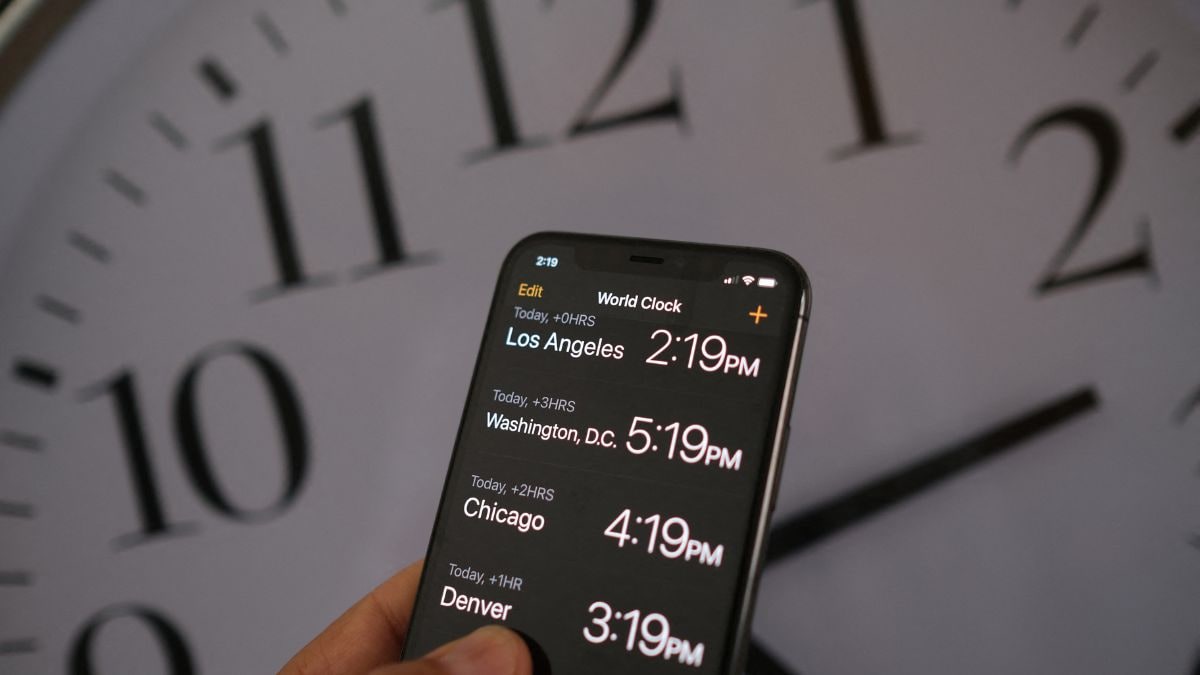
That much-awaited extra hour of sleep is on the way for millions in the United States, as the daylight saving time comes to an end. On November 3, Sunday, at 2 am, clocks will roll back by one hour, so remember to reset it before bed.
However, there is also a downside: for the next few months, darkness will set in by late afternoon, which can hamper daily routines. Standard time remains in effect until March 09, when clocks will once again ‘spring forward’ as daylight saving time resumes.
The spring change often disrupts body rhythms, with lighter evenings and darker mornings making it challenging to fall asleep on time. Studies even suggest an increase in heart attacks and strokes around the spring shift. Meanwhile, the autumn change is generally easier to adjust to, though some may struggle with the early nightfall, especially those affected by seasonal affective disorder (SAD), a form of depression linked to shorter daylight hours in the colder months.
ALSO READ |
Why doctors are calling the UK to abolish its yearly clock-changing system
Several health organisations, including the American Medical Association and the American Academy of Sleep Medicine, have called for a permanent move to standard time, arguing it aligns better with our natural circadian rhythms. In 2023, the American Academy of Sleep Medicine led a coalition campaigning for state and federal laws to keep standard time year-round, with support from groups like the National Sleep Foundation and the Sleep Research Society.
Globally, most countries do not observe daylight saving time, and where it is observed – largely in Europe and North America – the date of the switch varies. Arizona and Hawaii are the only US states that remain on standard time year-round, opting out of daylight saving altogether.
Here’s a quick guide to the twice-yearly clock change:
What is daylight saving time?
Daylight saving time (DST) is observed from March to November, during which most Americans set their clocks an hour ahead. This shift provides an extra hour of daylight in the evenings, while the “fall back” in November restores an hour to the mornings, helping to brighten darker winter mornings.
In 2024, daylight saving began on March 10, Sunday, at 2 am, when clocks were pushed forward by one hour. This twice-annual adjustment affects most of the Americans, though not all states participate.
How does the human body reacts to the light?
The body’s master clock, located in the brain, adjusts based on light and darkness. Known as the circadian rhythm, this natural 24-hour cycle regulates when we feel tired and when we are more alert. It also evolves with age, therefore, young children are often early risers while teenagers tend to be harder to wake.
Morning light recalibrates this rhythm each day. By evening, the body releases melatonin, a hormone that makes us drowsy. However, when daylight saving extends light exposure, melatonin’s release is delayed, disrupting the natural cycle.
The circadian clock does not only impact sleep, it also plays a role in regulating heart rate, blood pressure, stress hormones, and metabolism.
ALSO READ |
Turn off the alarm: Why we may need more sleep during winters
How does changing the clock impact sleep?
Even shifting the clock by one hour can disturb sleep patterns. Work and school schedules remain the same, but the change can disrupt our internal 24-hour circadian rhythm. This natural cycle, guided by light, controls when the body releases melatonin, the sleep-promoting hormone.
For many, this disruption comes on top of an already challenging sleep deficit: around one in three adults in the US sleeps less than the recommended seven hours, and over half of teenagers miss out on the suggested eight hours. This lack of sleep can lead to feelings of fatigue, irritability, and reduced focus, while long-term deprivation is linked to heart disease, cognitive decline, and obesity.
ALSO READ |
Daylight saving time linked to heart attacks: study
People with Alzheimer’s and other dementias can be particularly affected, as their body clocks may already be out of sync. Health organisations like the American Academy of Sleep Medicine and the American Medical Association have called for the US to adopt standard time permanently, as it better aligns with our natural rhythms.
How to prepare yourself for the time change?
1. Gradually adjust bedtimes
To ease into the new schedule, try adjusting your bedtime little by little in the days leading up to the change.
2. Get more daylight exposure
As days shorten, prioritise time in natural sunlight, especially in the morning, to help reset your circadian rhythm.
3. Use a sleep mask
Sleep masks can help block light and prevent early wake-ups, improving sleep quality.
4. Change clocks the night before
Setting your clock back the evening before avoids confusion and allows your body to start adjusting naturally.
Will the US ever get rid of the time change?
There is ongoing discussion among lawmakers about ending the time switch.
The Sunshine Protection Act, a now-stalled bipartisan bill, proposes making daylight saving time permanent.
However, health experts generally recommend sticking with standard time for better alignment with natural sleep cycles.
Which states observe daylight saving time?
Most US states observe daylight saving, though Arizona and Hawaii do not. Some Native American territories in Arizona observe it, while US territories like Puerto Rico, Guam, and the Virgin Islands remain on standard time year-round.
With inputs from AP