
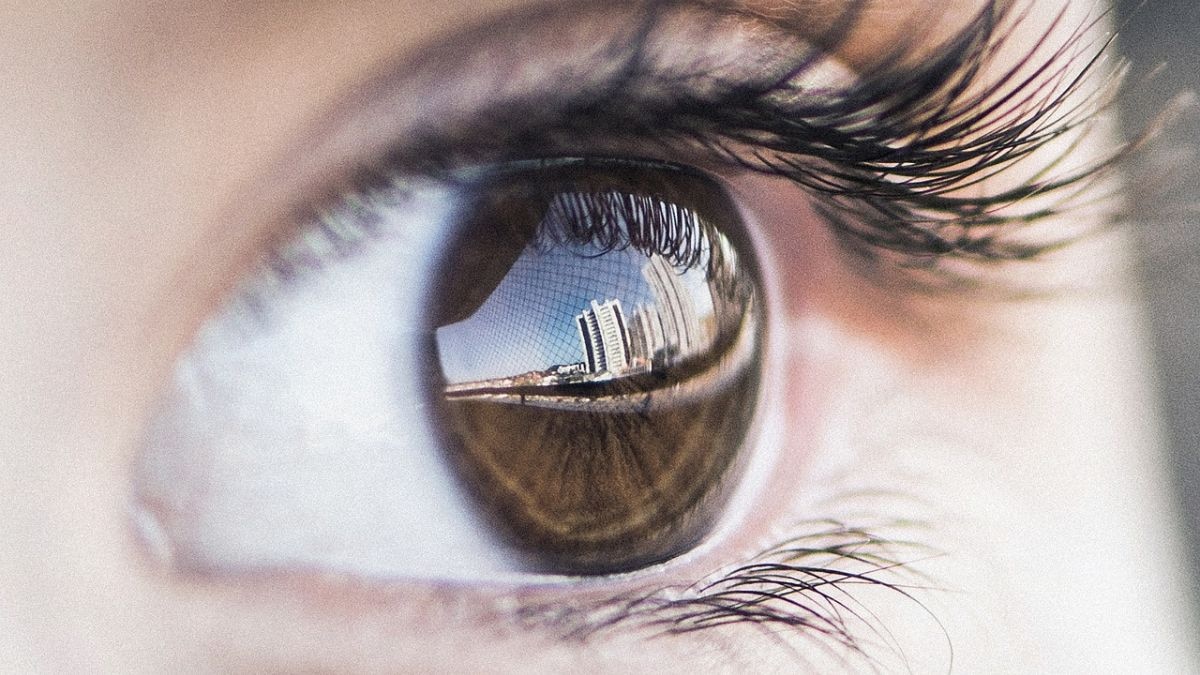
Scientists have long studied the size of our pupils to understand attention, emotion and even medical conditions. But now, new research has surprisingly revealed that they change size in sync with our breathing. Here’s why this discovery is important
read more
You have probably heard the saying that the eyes are the windows to the soul, but now it turns out that they are also connected to how we breathe. Scientists have long studied the size of our pupils to understand attention, emotion and even medical conditions. But now,
new research has surprisingly revealed that they change size in sync with our breathing.
Our pupils are never static; they constantly adjust in response to both external and internal factors. The most well-known is that they control how much light enters the eye, just like a camera aperture.
You can easily test this yourself: look into a mirror and shine a light into your eye, and you’ll see your pupils shrink. This process directly affects our visual perception. Larger pupils help us to detect faint objects, particularly in our peripheral vision, while smaller pupils enhance sharpness, improving tasks like reading.
Indeed, this reflex is so reliable that doctors use it to assess brain function. If a pupil fails to react to light, it could signal a medical emergency such as a stroke.
However, it is not just light that our pupils respond to. It’s also well established that our pupils constrict when focusing on a nearby object, and dilate in response to cognitive effort or emotional arousal.
As the German pupil-research pioneer
Irene Loewenfeld once said: “Man may either blush or turn pale when emotionally agitated, but his pupils always dilate.”
For this reason, pupil size is often used in psychology and neuroscience research as a measure of mental effort and attention.
How breathing changes your pupil response
For many decades,
these three kinds of pupil response were the only ones that scientists were sure existed. Now, myself and our team of researchers at the Karolinska Institute in Stockholm and the University of Groningen in the Netherlands have confirmed that breathing is a fourth.
In what will now be known as “pupillary respiratory phase response”, pupils tend to be largest during exhalation and smallest around the start of inhalation. Unlike other pupil responses, this one originates exclusively in the body and of course happens constantly. Equally uniquely, it covers both dilation and constriction.
There had in fact been anecdotal hints of a connection between breathing and our pupils for more than 50 years. But when the team reviewed past studies
the evidence was inconclusive at best. Given how widely pupil size is used in both medicine and research, we realised it was crucial to investigate this further.
We confirmed through a series of five experiments with more than 200 participants that pupil size fluctuates in sync with breathing, and also that this effect is remarkably robust. In these studies, we invited the participants to our lab and recorded their pupil size and breathing pattern while they were relaxing or performing tasks on a computer screen.
We systematically varied the other key pupil-response factors throughout the study – lighting, fixation distance and mental effort required for tasks. In all cases, the way that breathing affects the pupils remained constant.
Additionally, we examined how different breathing patterns affected the response.
Participants were instructed to breathe solely through their nose or mouth and to adjust their breathing rate, as well as slowing it down and speeding it up. In all cases, the same pattern emerged: pupil size remained smallest around the onset of inhalation and largest during exhalation.
Why this matters
This discovery changes the way we think about both breathing and vision. It suggests a deeper connection between breathing and the nervous system than we previously realised. The next big question is whether these subtle changes in pupil size affect how we see the world.
The fluctuations are only fractions of a millimetre, which is less than the pupil response to light, but similar to the pupil response to mental effort or arousal. The size of these fluctuations is theoretically large enough to influence our visual perception. It may therefore be that our vision subtly shifts within a single breath between optimising for detecting faint objects (with larger pupils) and distinguishing fine details (with smaller pupils).
In addition, just as the pupillary light response is used as a diagnostic tool, changes in the link between pupil size and breathing could be an early sign of neurological disorders.
This research is part of a broader effort to understand how our internal bodily rhythms influence perception. Scientists are increasingly finding that our brain doesn’t process external information in isolation – it integrates signals from within our bodies, too. For example,
information from our heart and gastric rhythms have also been suggested to enhance or hinder the processing of incoming sensory stimuli.
If our breathing affects how our pupils change, could it also shape how we perceive the world around us? This opens the door to new research on how bodily rhythms shape perception – one breath at a time.
Martin Schaefer, Postdoctoral Researcher in Cognitive Neuroscience and Behavioral Psychology, Karolinska Institutet
This article is republished from
The Conversation under a Creative Commons license. Read the
original article.