
Millions would lose Medicaid coverage. Millions would be left without health insurance. Signing up for health plans on the Affordable Care Act marketplaces would be harder and more expensive.
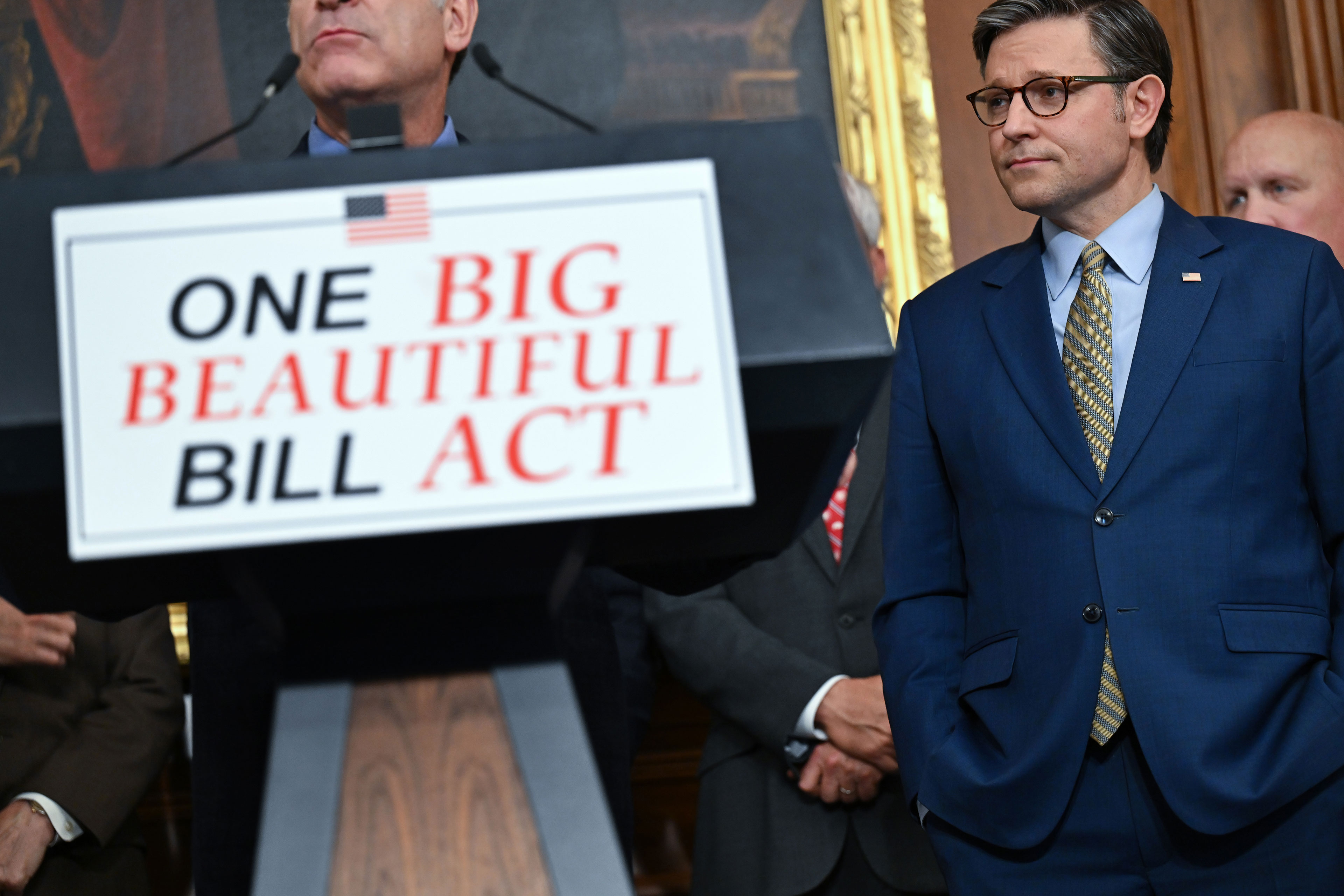
President Donald Trump’s domestic policy legislation, the One Big Beautiful Bill Act that cleared the House in May and now moves to the Senate, could also be called Obamacare Repeal Lite, its critics say. In addition to causing millions of Americans to lose their coverage under Medicaid, the health program for low-income and disabled people, the measure includes the most substantial rollback of the ACA since Trump’s Republican allies tried to pass legislation in 2017 that would have largely repealed President Barack Obama’s signature domestic accomplishment.
One difference today is that Republicans aren’t describing their legislation as a repeal of the ACA, after the 2017 effort cost them control of the House the following year. Instead, they say the bill would merely reduce “waste, fraud, and abuse” in Medicaid and other government health programs.
“In a way, this is their ACA repeal wish list without advertising it as Obamacare repeal,” said Philip Rocco, an associate professor of political science at Marquette University in Milwaukee and co-author of the book “Obamacare Wars: Federalism, State Politics, and the Affordable Care Act.”
The GOP, Rocco said, learned eight years ago that the “headline of Obamacare repeal is really bad politics.”
Democrats have tried to frame Trump’s One Big Beautiful Bill Act as an assault on Americans’ health care, just as they did with the 2017 legislation.
“They are essentially repealing parts of the Affordable Care Act,” Rep. Frank Pallone Jr. (D-N.J.) said as the House debated the measure in May. “This bill will destroy the health care system of this country.”
Nearly two-thirds of adults have a favorable view of the ACA, according to polling by KFF, a national health information nonprofit that includes KFF Health News.
In contrast, about half of people polled also say there are major problems with waste, fraud, and abuse in government health programs, including Medicaid, KFF found.
“We are not cutting Medicaid,” House Speaker Mike Johnson said May 25 on CNN’s “State of the Union,” describing the bill’s changes as affecting only immigrants living in the U.S. without authorization and “able-bodied workers” whom he claimed are on Medicaid but don’t work.
The program is “intended for the most vulnerable populations of Americans, which is pregnant women and young single mothers, the disabled, the elderly,” he said. “They are protected in what we’re doing because we’re preserving the resources for those who need it most.”
The 2025 legislation wouldn’t cut as deeply into health programs as the failed 2017 bill, which would have led to about 32 million Americans losing insurance coverage, the Congressional Budget Office estimated at the time. By contrast, the One Big Beautiful Bill Act, with provisions that affect Medicaid and ACA enrollees, would leave nearly 9 million more people without health insurance by 2034, according to the CBO.
That number rises to nearly 14 million if Congress doesn’t extend premium subsidies for Obamacare plans that were enhanced during the pandemic to help more people buy insurance on government marketplaces, the CBO says. Without congressional action, the more generous subsidies will expire at the end of the year and most ACA enrollees will see their premiums rise sharply.
The increased financial assistance led to a record 24 million people enrolled in ACA marketplace plans this year, and health insurance experts predict a large reduction without the enhanced subsidies.
Loss of those enhanced subsidies, coupled with other changes set in the House bill, will mean “the ACA will still be there, but it will be devastating for the program,” said Katie Keith, founding director of the Center for Health Policy and the Law at Georgetown University.
Republicans argue that ACA subsidies are a separate issue from the One Big Beautiful Bill Act and accuse Democrats of conflating them.
The House-passed bill also makes a number of ACA changes, including shortening by a month the annual open enrollment period and eliminating policies from Joe Biden’s presidency that allowed many low-income people to sign up year-round.
New paperwork hurdles the House bill creates are also expected to result in people dropping or losing ACA coverage, according to the CBO.
For example, the bill would end most automatic reenrollment, which was used by more than 10 million people this year. Instead, most ACA enrollees would need to provide updated information, including on income and immigration status, to the federal and state ACA marketplaces every year, starting in August, well before open enrollment.
Studies show that additional administrative hurdles lead to people dropping coverage, said Sabrina Corlette, a research professor and co-director of the Center on Health Insurance Reforms at Georgetown University.
“Not only do people drop out of the process, but it tends to be healthier, younger, lower-income folks who drop out,” she said. “That’s dumb because they go uninsured. Also, it is bad for the insurance market.”
Supporters of the provision say it’s necessary to combat fraudulent enrollment by ensuring that ACA beneficiaries still want coverage every year or that they are not being enrolled without their permission by rogue sales agents. Most of the Medicaid coverage reductions in the bill, the CBO says, are due to new work requirements and directives for the 21 million adults added to the program since 2014 under an expansion authorized by the ACA.
One new requirement is that those beneficiaries prove their eligibility every six months, instead of once a year, the norm in most states.
That would add costs for states and probably lead to people who are still eligible falling off Medicaid, said Oregon Medicaid Director Emma Sandoe. Oregon has one of the most liberal continuous eligibility policies, allowing anyone age 6 or older to stay on for up to two years without reapplying.
Such policies help ensure people don’t fall off for paperwork reasons and reduce administrative burden for the state, Sandoe said. Requiring more frequent eligibility checks would “limit the ability of folks to get care and receive health services, and that is our primary goal,” Sandoe said.
The 2017 repeal effort was aimed at fulfilling Trump’s promises from his first presidential campaign. That’s not the case now. The health policy provisions of the House bill instead would help to offset the cost of extending about $4 trillion in tax cuts that skew toward wealthier Americans.
The Medicaid changes in the bill would reduce federal spending on the program by about $700 billion over 10 years. CBO has not yet issued an estimate of how much the ACA provisions would save.
Timothy McBride, a health economist at Washington University in St. Louis, said Republican efforts to make it harder for what they term “able-bodied” adults to get Medicaid is code for scaling back Obamacare.
The ACA’s Medicaid expansion has been adopted by 40 states and Washington, D.C. The House bill’s work requirement and added eligibility checks are intended to drive off Medicaid enrollees who Republicans believe never should have been on the program, McBride said. Congress approved the ACA in 2010 with no Republican votes.
Most adult Medicaid enrollees under 65 are already working, studies show. Imposing requirements that people prove they’re working, or that they’re exempt from having to work, to stay on Medicaid will lead to some people losing coverage simply because they don’t fill out paperwork, researchers say.
Manatt Health estimates that about 30% of people added to Medicaid through the ACA expansion would lose coverage, or about 7 million people, said Jocelyn Guyer, senior managing director of the consulting firm.
The bill also would make it harder for people enrolled under Medicaid expansions to get care, because it requires states to charge copayments of up to $35 for some specialist services for those with incomes above the federal poverty level, which is $15,650 for an individual in 2025.
Today, copayments are rare in Medicaid, and when states charge them, they’re typically nominal, usually under $10. Studies show cost sharing in Medicaid leads to worse access to care among beneficiaries.
Christopher Pope, a senior fellow with the conservative Manhattan Institute, acknowledged that some people will lose coverage but rejected the notion that the GOP bill amounts to a full-on assault on the ACA.
He questioned the coverage reductions forecast by the CBO, saying the agency often struggles to accurately predict how states will react to changes in law. He said that some states may make it easy for enrollees to satisfy new work requirements, reducing coverage losses.
By comparison, Pope said, the ACA repeal effort from Trump’s first term a decade ago would have ended the entire Medicaid expansion. “This bill does nothing to stop the top features of Obamacare,” Pope said.
But McBride said that while the number of people losing health insurance under the GOP bill is predicted to be less than the 2017 estimates, it would still eliminate about half the ACA’s coverage gains, which brought the U.S. uninsured rate to historical lows. “It would take us backwards,” he said.