
Environmental Standards for Carbon Credit Exchange
A carbon credit exchange allows businesses to purchase credits that offset their emissions in furtherance of a voluntary commitment to reduce net greenhouse gas emissions. These markets are separate from “compliance” carbon markets regulated by government and other authorities, which set caps on total emissions and force businesses to trade allowances in order to stay within those limits. A carbon credit typically represents one metric ton of reduced, avoided, or removed atmospheric carbon dioxide or equivalent.
These voluntary carbon markets (VCMs) are a vital tool for business to manage their environmental impact, and they should be encouraged to continue to grow and expand. However, VCMs are not without their challenges. For example, some would-be participants are wary of participating in VCMs due to fears of greenwashing and securities laws violations, among other concerns. The CFTC’s proposed guidance is meant to help address these issues and foster integrity in the voluntary carbon market.
The Commodity Futures Trading Commission’s Proposed Guidance for CFTC-Regulated Exchanges Considering Listing of Voluntary carbon credit exchange Derivatives aims to promote the transparency, liquidity, and integrity of these developing markets. The guidance provides a number of factors that exchanges should consider when reviewing a VCM, including its decision-making protocol, how it attained its independence, and other governance measures. It also suggests that an exchange should review the VCM’s verification and reporting protocols, public and stakeholder engagement processes, and risk management policies.
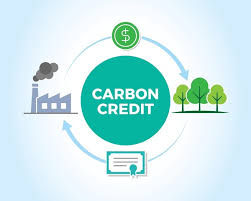
Are There Environmental Standards for Carbon Credit Exchange?
Moreover, the VCM’s methodology for calculating carbon credits should be reviewed to ensure that it is robust and transparent. To assess the VCM’s method, an independent auditor should review the project’s paperwork and perform field inspections. The auditor should compare greenhouse gas emissions from the project scenario to a reference, or baseline, scenario, in which a comparable level of emissions would have occurred if the project were not implemented. The VCM’s calculation should be accurate, and the auditor should verify that the project meets the emissions reductions it claims to have achieved.
Another crucial issue is the prevention of double-counting. This occurs when two different carbon registries claim to have credited the same emission reductions or removals. To prevent this, the VCM’s verification and reporting procedures should provide reasonable assurance that the VCCs credited by the program represent additionality, that is, they have not been claimed or purchased by another registry. This can be done by requiring the VCM to implement effective measures to cross-check against multiple carbon registries.
The VCM should also have procedures in place to identify the underlying emission reductions or removals and to ensure that they are not duplicated. This is a critical step in building high-integrity carbon credit exchanges and preventing fraud and manipulation in these growing markets. The CFTC is working to combat misconduct in these markets, with recent actions including a whistleblower alert and the creation of an Environmental Fraud Task Force.