
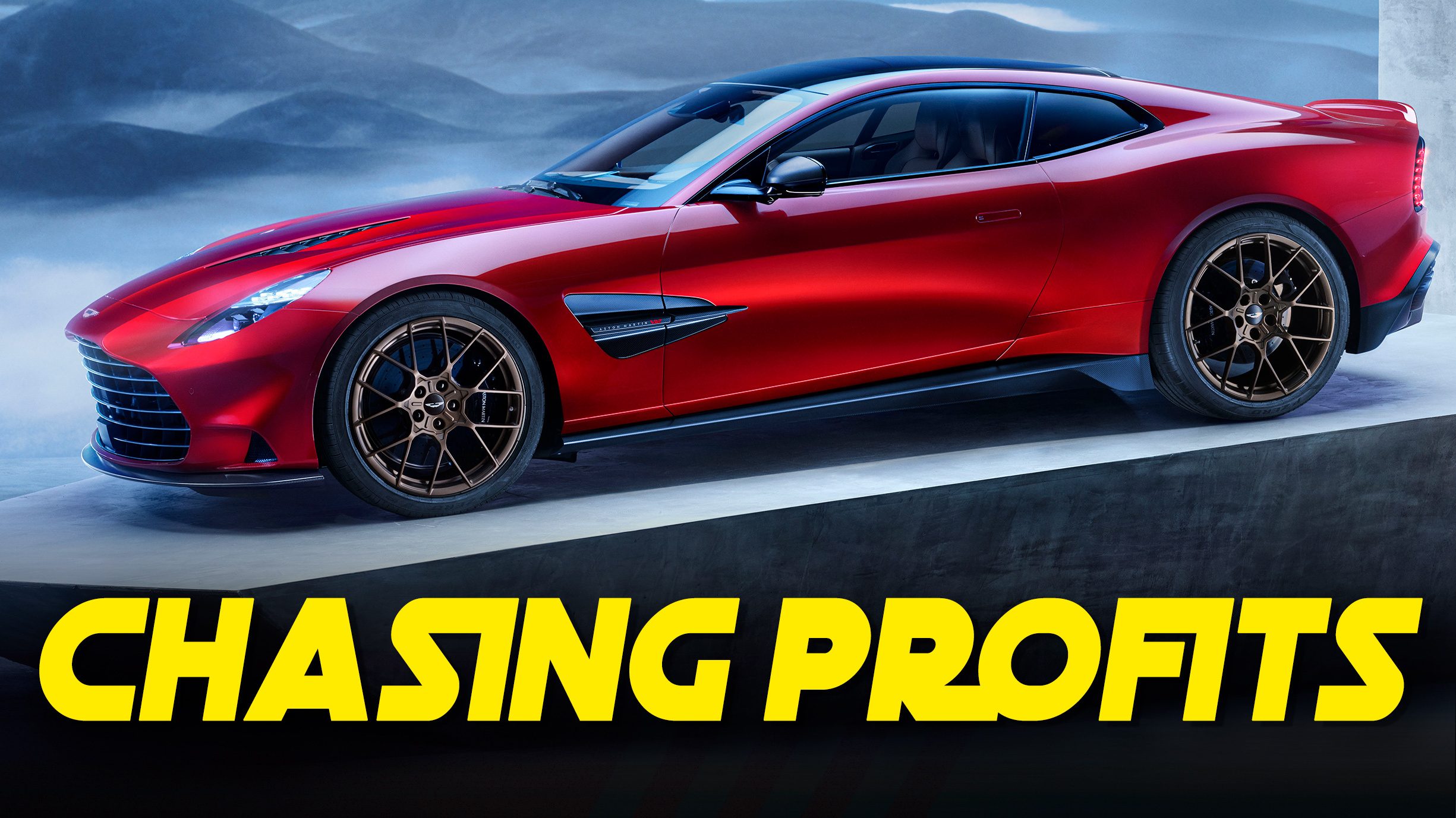
Hallmark, who led Bentley in the green, wants to do the same with Aston Martin
February 14, 2025 at 10:24

- Adrian Hallmark has set a 12-18 month timeline to steer Aston Martin toward success.
- The CEO believes profitability depends on value, not simply increasing car volume.
- The brand will focus on creating new derivatives based on existing models for growth.
The newly-appointed chief executive of Aston Martin has set himself a tight deadline, just 12 to 18 months, to turn around the company’s long-troubled fortunes. While financial struggles have been a recurring theme in Aston Martin’s 112-year history, the brand’s latest leader, Adrian Hallmark, has a track record of success. As the former CEO of Bentley, he played a key role in its financial turnaround, and now he’s taking on what might be his biggest challenge yet.
In a interview with Automotive News, Hallmark described the opportunity to make Aston Martin sustainably profitable for the first time in over a century as “irresistible.” But he knows the clock is ticking. “It’s got to be 12 to 18 months, by then, it has to be fixed,” he said. “I’m not saying we will be delivering Ferrari-level financial performance by then, but [it will be] fixed in terms of going in the right direction to where it’s going to work properly.”
Read: Aston Martin Boss Admits The Brand Needs More Stick Shifts
Hallmark didn’t set a specific target for when Aston Martin will become profitable, but he made it clear that chasing higher sales numbers isn’t the priority. Instead, the focus is on improving value creation, essentially making each car more profitable rather than just selling more of them. He pointed to Ferrari’s long-standing strategy of limiting production to maintain exclusivity while raking in substantial profits.
“I’m not saying that is our limit [7,000 units], but we don’t need 13,000 to be a great company. There will be volume growth, but you’ll also see us addressing the productivity and cost structure of the company,” he revealed.
A New Focus On Derivatives
Hallmark arrived at Aston Martin after it launched four new models in 18 months. He said that while releasing several new models within such a short period “was great,” it also caused the company to lose 30-40% of its capacity as it had to slow down production. Moving forward, Aston Martin will focus on launching new derivatives of these new models, following a similar path to Porsche with the fabled 911.

“We have got to be more realistic about the timing for the programs,” Hallmark said. “But derivatives are easier. Say you have got 5,000 parts on a car. With the Vanquish about 4,900 of them were brand new. With a derivative about 100 are new. Adding a sportier version or more luxurious version is a marginal increase in complexity. For the core product 90 to 95 percent of the bill of material is the same. We have been on the big launch phase. Now we are in the micro-launch phase.”
The new derivatives will include at least two models based on the mid-engined Valhalla. Auto News expects one to be a convertible, while Hallmark said the other will be “a special.”
Hallmark added that the number of people who can afford vehicles in Aston Martin’s territory has grown significantly, and the average wealth of these people has grown fourfold over the past 20 years. That means more potential buyers are willing to splash the cash on a car like the Vanquish or an SUV like the DBX.
