
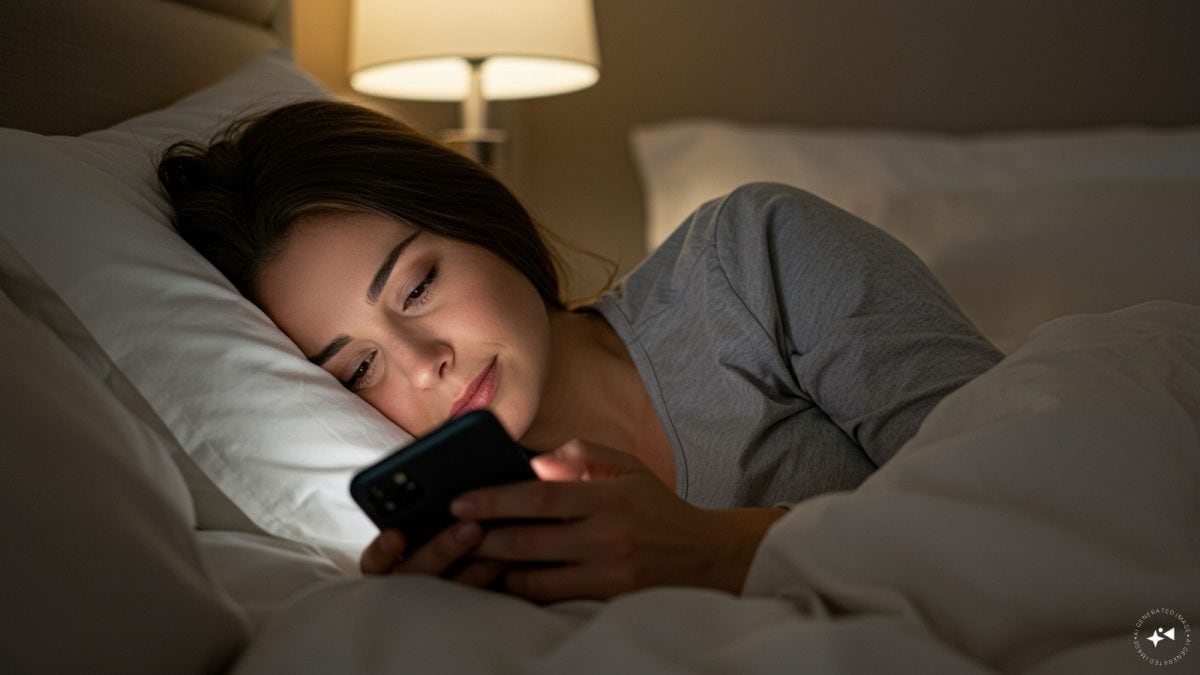
We’ve all been there—snuggled under the covers, scrolling endlessly through social media, watching just one more video, or catching up on messages before finally putting the phone down. But what seems like harmless screen time could be sabotaging your sleep more than you realise.
A new Norwegian study suggests that spending an hour on your phone in bed can drastically increase the risk of insomnia, cutting down your sleep time and making it harder to rest.
But how is using your phone linked to less sleep? What did the study suggest? Here’s a closer look.
Sleep or scroll? What the research says
A large-scale study conducted by researchers from the Norwegian Institute of Public Health surveyed over 45,202 young adults aged 18 to 28 about their screen habits in bed.
Participants were asked about their bedtime routines, including whether they used screens before sleep, how long they spent on them, and what kind of content they engaged with, ranging from social media and streaming videos to gaming, browsing the internet, listening to podcasts, or reading study material.
Participants also reported details about their sleep—what time they went to bed, how long it took them to fall asleep, whether they struggled with insomnia, and how often they felt sleepy during the day.
To understand patterns, researchers grouped responses into three categories: those who primarily used social media, those who used screens but not for social media, and those who engaged in multiple screen activities, including social media.
The results, published in the Frontiers journal, were striking—every extra hour of screen time in bed reduced sleep by an average of 24 minutes and raised the chances of insomnia by 63 per cent.
Further, the researchers found that it wasn’t just about doomscrolling on social media. Whether it was texting, watching videos, or reading articles, screen use itself is the key factor in sleep disruption.
“While previous research has often suggested that social media use is particularly disruptive to sleep, our findings challenge this notion,” senior author Borg Sivertsen, PhD, senior researcher at the Norwegian Institute of Public Health, told Healthline.
Researchers believe this effect is largely due to time displacement, where screen use delays sleep by consuming time that would otherwise be spent resting.
However, they caution that the study was conducted within a single cultural setting, and the relationship between screen use and sleep could vary globally.
Additionally, to compare social media use with other screen activities, some behaviours—such as listening to music or gaming—were grouped together, even though they may have different effects on sleep. The study also did not determine cause and effect—it remains unclear whether screen use leads to insomnia or if individuals with insomnia turn to screens more frequently.
“This study cannot determine causality — for example, whether screen use causes insomnia or if students with insomnia use screens more,” Dr Gunnhild Johnsen Hjetland, lead author of the study, said. “The study also did not include physiological assessments, which could provide more precise insights into sleep patterns.”
Also read:
What is pink noise, believed to improve sleep?
How watching screen disrupts your sleep
The biggest culprit behind sleep disruption is often blue light—the high-energy light emitted by phones, tablets, and laptop screens.
Research has shown that exposure to blue light at bedtime can interfere with the body’s natural production of melatonin, the hormone responsible for regulating sleep.
Melatonin helps signal to the body that it’s time to rest, and when its production is disrupted, falling asleep and staying asleep becomes more difficult.
During the day, blue-wavelength light plays a positive role, boosting attentiveness, improving mood, and sharpening reaction times. However, concerns about its negative impact on sleep have been widely debated, and not all research fully supports the idea that blue light is the main culprit.
A recent study published in the Nature journal, examined how exposure to different wavelengths of light before bedtime affected sleep. Researchers tracked 16 participants and measured the effects of blue versus yellow light exposure for an hour before bed. Surprisingly, they found no significant difference between the two. Their findings suggest that any bright light before bedtime—regardless of colour—may be equally disruptive to sleep.
“We still have the same neural circuitry as our caveman ancestors, whose lives and activities were ruled by the sun,” said Leah Kaylor, PhD, MSCP, a clinical psychologist, in an interview with Healthline. “Since we still have the same circuitry, we can easily confuse the brain by being in the presence of light close to bedtime.”
Aslo read:
Why sleeping with a cuddly is good even for adults
How to sleep better without giving up your phone completely
If ditching screens before bed sounds impossible, don’t worry—small changes can still make a big difference. Here’s how you can improve your sleep without giving up your favourite nighttime scroll entirely:
1. Set a screen surfew
Try to stop using screens at least 30–60 minutes before bed. If you absolutely must check something, use night mode or a blue light filter to reduce the impact.
2. Create a wind-down routine
Replace your phone habit with a relaxing pre-sleep routine—read a physical book, listen to calming music, or do some gentle stretching. This signals your body that it’s time to rest.
3. Keep your phone out of reach
Charge your phone outside the bedroom or place it across the room so you’re not tempted to pick it up. Using an actual alarm clock can help break the habit of checking your phone first thing in the morning.
4. Dim the lights before sleeping
Lowering indoor lighting an hour before bed helps your body naturally produce melatonin, making it easier to fall asleep.
5. If you can’t sleep, don’t stay in bed
Lying awake scrolling won’t help. If you can’t sleep after 20 minutes, get up and do a calming activity (without screens) until you start feeling drowsy.
With input from agencies