
pcb circuit board assembly handle prolonged exposure to vibration
In the realm of electronic devices, particularly those deployed in demanding environments such as automotive systems, aerospace applications, and industrial machinery, prolonged exposure to vibration poses a significant challenge. PCB circuit board assembly, as the foundation of these devices, must be engineered to withstand such conditions while maintaining reliable performance. This article explores how PCB assembly processes address the issue of prolonged exposure to vibration.
Vibration can arise from various sources, including motor operation, transportation, and machinery operation, causing mechanical stress and fatigue on electronic components and solder joints. To mitigate the effects of vibration, manufacturers employ several strategies during PCB assembly. One fundamental approach is the selection of high-quality materials with robust mechanical properties. Components, substrates, and solder alloys with high fatigue resistance are chosen to withstand the mechanical forces exerted during vibration.
Furthermore, the design of the pcb circuit board assembly layout plays a crucial role in managing vibration-induced stress. Proper component placement, trace routing, and mounting techniques are essential to distribute mechanical loads evenly across the board. Components susceptible to vibration-induced failures, such as large capacitors or connectors, may be secured using additional fasteners or mechanical reinforcements to prevent movement or displacement.
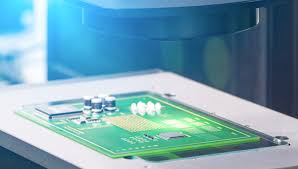
How do pcb circuit board assembly handle prolonged exposure to vibration?
Moreover, solder joint reliability is paramount in ensuring the integrity of PCB assembly under prolonged vibration. Manufacturers employ techniques such as solder paste inspection (SPI), automated optical inspection (AOI), and X-ray inspection to verify the quality of solder joints and detect potential defects such as voids, cracks, or cold solder joints. Additionally, the use of advanced soldering techniques such as reflow soldering with controlled atmosphere or vapor phase soldering helps ensure consistent and reliable solder connections.
In applications where extreme vibration is anticipated, manufacturers may implement additional measures such as underfilling or encapsulation to enhance the mechanical robustness of PCB assemblies. Underfill materials, typically epoxy-based compounds, are injected beneath surface-mount components to provide structural reinforcement and prevent solder joint cracking or detachment. Encapsulation techniques involve coating the entire PCB assembly with a protective material such as epoxy resin or silicone rubber to create a ruggedized and vibration-resistant barrier.
Moreover, securing the PCB assembly within a vibration-resistant housing or enclosure is essential for further protection against mechanical shock and vibration. Shock-absorbing mounting techniques, such as rubber grommets or spring-loaded mounts, can isolate the PCB assembly from external vibrations and dampen mechanical impacts. Additionally, conformal coatings or potting compounds may be applied to the PCB assembly to provide an extra layer of protection against environmental factors such as moisture, dust, and chemicals.
In conclusion, PCB circuit board assembly processes are designed to withstand prolonged exposure to vibration by employing a combination of material selection, design optimization, solder joint reliability, and mechanical reinforcement techniques. By ensuring the mechanical robustness of PCB assemblies, manufacturers can enhance the reliability and longevity of electronic devices operating in vibration-prone environments. As technology continues to advance, so too will the methods and materials used in PCB assembly, paving the way for even more resilient and durable electronic systems.