
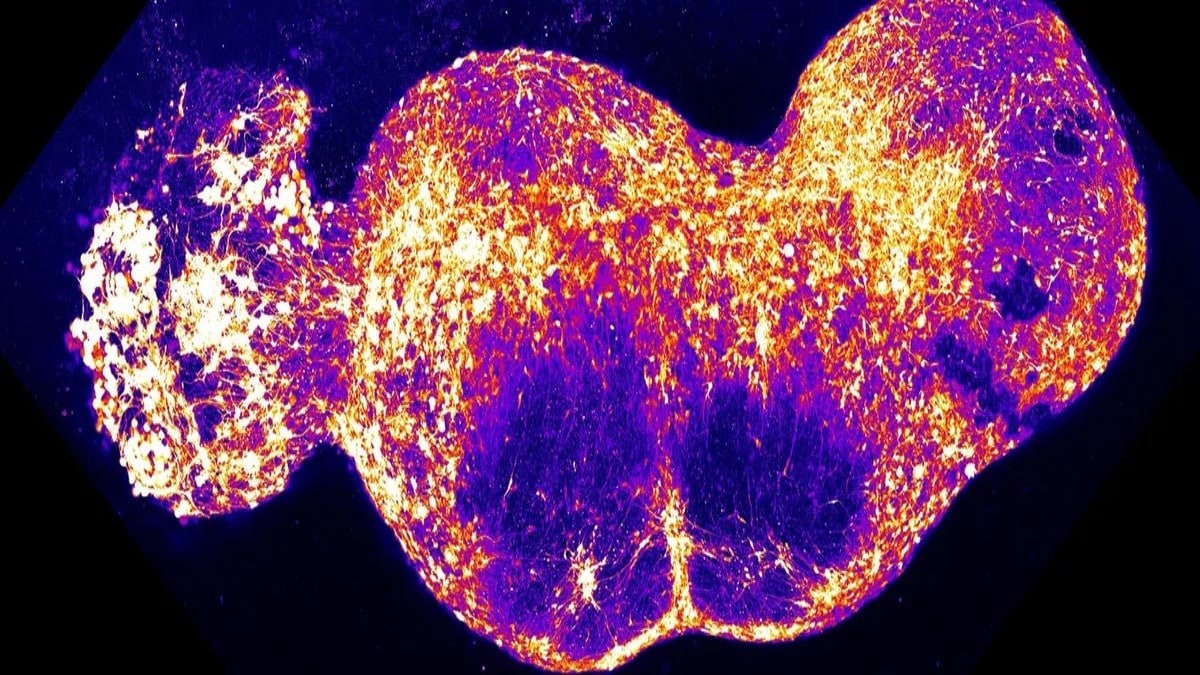
A research team at Stanford University has become the first to assemble a functioning brain circuit in a lab dish by combining different types of neurons grown from human stem cells, according to a report
read more
Scientists have successfully recreated in a laboratory the sensory pathway responsible for transmitting pain signals to the human brain, an achievement that represents a major step forward in understanding how pain is processed and could open the door to more effective treatments for chronic pain conditions.
According to a Financial Times report, a research team at Stanford University has become the first to assemble a functioning brain circuit in a lab dish by combining different types of neurons grown from human stem cells.
The breakthrough, published Wednesday in Nature, marks a significant advance in synthetic biology and the replication of living tissues.
When exposed to sensory stimuli, the engineered brain circuit displayed waves of electrical activity. Notably, the application of capsaicin — the compound responsible for the heat in chili peppers — triggered a strong neural response, added the report.
Sergiu Pașca, who led the project, told the Financial Times that the findings could accelerate efforts to understand how the human nervous system processes pain, potentially paving the way for new treatments for neurological disorders.
““Now that we can model this pathway non-invasively, without using animals, we hope to find better therapeutics for chronic pain,” Financial Times quoted Pasca as saying.
“The best drugs we have now are opioids, derived originally from poppy seeds thousands of years ago and highly addictive,” he added.
According to the report, the team began by reprogramming skin cells into stem cells, then guided them using chemical signals to form four types of organoids — miniature 3D structures mimicking key regions of the human pain pathway, from skin sensory neurons to brain cortical neurons.
These organoids were placed side by side in a culture dish. Over about 100 days, they fused into a single synthetic brain circuit, or “assembloid,” nearly 1 cm long and containing around 4 million cells. Neural connections formed between the organoids, producing synchronised patterns of electrical activity, added the report.
“You would never have been able to see this wavelike synchrony if you couldn’t watch all four organoids connected, simultaneously,” Pașca was quoted as saying.
“The brain is more than the sum of its parts,” he added.
The synthetic brain circuits could be used to screen for better-targeted therapies for pain that tone down excessive waves of neurotransmission, without affecting the brain’s reward circuitry as opioids do, Pașca said.
The assembloids themselves cannot be said to “feel pain”, he emphasised: “They transmit nervous signals that are processed by a second pathway going deeper into the brain and giving us the aversive, emotional component of pain.”
While the breakthrough marks a significant step forward, project lead Pașca said the ethical considerations surrounding organoid research as scientists move toward creating more complex brain-like structures.
“We are thinking very carefully about how this work proceeds, in the face of the immense need to understand psychiatric disorders and the risk of building something closer to a human brain,” Financial Times quoted him as saying.
Guo-li Ming, a professor of neuroscience and psychiatry at the University of Pennsylvania who was not involved in the study, praised the research for its ability to reveal aspects of human neural circuitry that animal models cannot replicate.
“This model provides the opportunity to study the complex neural network activity linking sensory input to the cortex, which was previously not feasible,” he told Financial Times.
Stanford has filed a patent application for the assembloid technology but has yet to decide on commercialisation plans.
With inputs from agencies